Smart Matching Strategies for Faster Level Completion In Fruit Goals Match
Fruit Goals Match may appear like a simple match puzzle game, but advancing through its later levels requires careful planning, pattern recognition, and efficient use of special mechanics. Many players struggle not because the levels are unfair, but because they approach the board without a clear objective-focused strategy. This blog explains how to play Fruit Goals Match effectively by prioritizing goals, managing moves wisely, and creating high-impact matches that lead to consistent wins.
Understanding Goal-Based Level Design
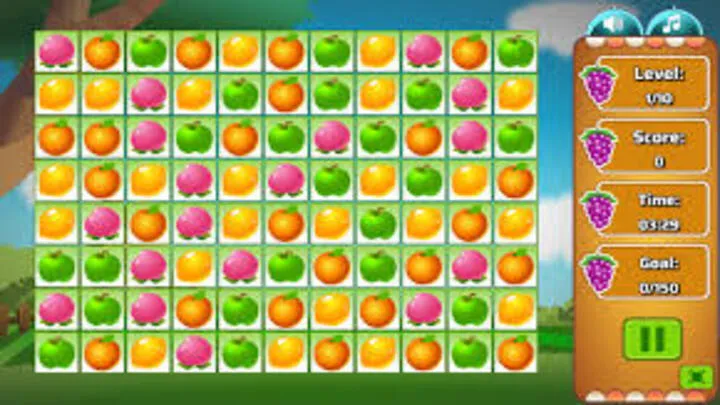
Fruit Goals Match differs from traditional match games by focusing heavily on specific objectives per level, rather than simple tile clearing.
Common objectives include:
- Collecting certain fruit types
- Clearing obstacles tied to fruit matches
- Triggering special tiles a set number of times
Success depends on understanding what the level truly demands.
Always Identify the Primary Goal First
Why Not All Matches Are Equal
Many players waste moves matching fruit that doesn’t contribute to the objective.
Before making your first move:
- Identify which fruit types are required
- Locate where objectives are blocked
- Determine which areas must be opened early
Every move should push progress toward the goal.
Creating Space Before Creating Power
Clearing Obstacles Early
Obstacles restrict movement and reduce match opportunities.
Best approach:
- Target blockers near objectives
- Open vertical paths for cascades
- Avoid edge matches that don’t unlock space
More space leads to stronger chain reactions.
Efficient Use of Special Matches
Knowing When to Create Power-Ups
Special matches are powerful but should be created intentionally.
Effective special matches include:
- Line clears for narrow sections
- Area clears near clustered objectives
- Combined effects for layered obstacles
Random specials often go to waste.
Combining Special Tiles Strategically
Timing Over Speed
Combining special tiles too early reduces their impact.
Wait until:
- Objectives are exposed
- Multiple obstacles are clustered
- One move can complete several goals
One strong move can replace many weak ones.
Managing Moves Like a Resource
Every Move Has a Cost
Later levels are designed to pressure players with limited moves.
Good habits:
- Avoid low-impact matches
- Look for cascades
- Choose moves that trigger multiple effects
Efficiency is key.
Understanding Fruit Drop Patterns
Fruit spawns follow semi-predictable behavior.
Observe:
- Where new fruit enters the board
- Which columns refill fastest
- How gravity affects cascades
This knowledge helps you plan future matches.
Handling Difficult Obstacles
Some obstacles require repeated interactions.
Strategies:
- Use special tiles instead of direct matches
- Combine power-ups near obstacles
- Let cascades finish the work
Indirect clearing saves moves.
Using Boosters Wisely
Boosters should solve problems, not create convenience.
Use boosters:
- When one obstacle blocks completion
- When space is too limited
- Near the end of a nearly completed level
Avoid using them early unless necessary.
Learning From Failed Attempts
Failure provides valuable information.
After losing:
- Identify wasted moves
- Notice blocked areas
- Adjust opening strategy
Retrying with knowledge improves success rates.
Conclusion
Fruit Goals Match rewards players who focus on objectives, manage space effectively, and use special matches with intention. By prioritizing goals over random matches, timing your power-ups, and conserving moves, you can overcome even the most challenging levels. Victory comes from planning smarter, not matching faster.