The Eternal Governor: Architecting the Pax Romana in Anno 117
The Eternal Governor: Architecting the Pax Romana in Anno 117
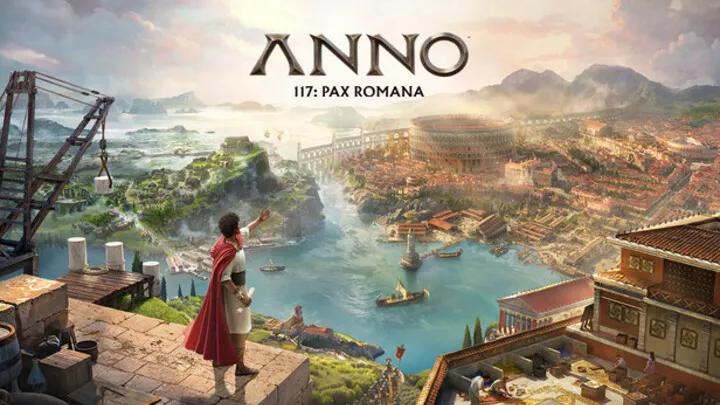
The Anno series has always been a delicate ballet of logistics and aesthetics, but Anno 117: Pax Romana introduces a profound shift by placing players at the helm of the Roman Empire's administrative machine at its absolute zenith. Moving away from the industrial rigidity of the 19th century, Pax Romana is built on the concept of "Provincial Identity" and "Cultural Flux." You are not just building a city; you are deciding whether to Romanize the frontier or adapt to local traditions in provinces like Latium or the rugged Albion. To succeed, a Governor must look beyond simple supply chains and master the nuances of the Roman social hierarchy, the hydraulic engineering of aqueducts, and the political gravity of the Senate. This guide provides a deep technical analysis of the systems required to transform a muddy outpost into the Jewel of the Empire.
1. The Provincial Mandate: Choosing Your Cultural Doctrine
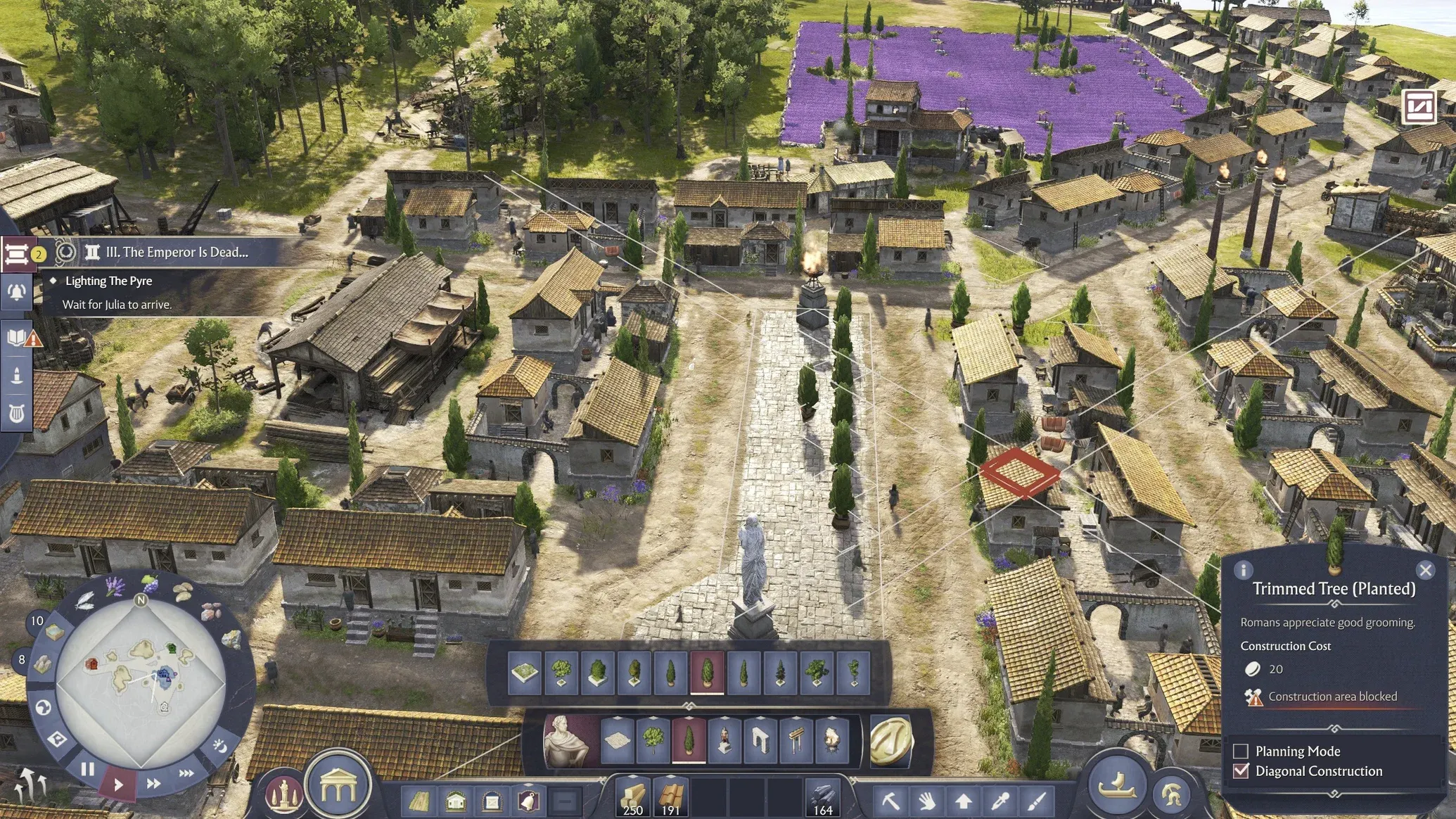
In Anno 117, your strategy begins before the first stone is laid. The game introduces a "Dual-Province" system where you can choose to start in the civilized heart of Latium or the rugged marshes of Albion. The technical difference lies in the Cultural Integration mechanic. Latium rewards "Orthodox Romanization," providing bonuses to tax revenue and public order for building classic Roman structures. In contrast, Albion allows for "Syncretism," where you can mix Roman infrastructure with Celtic production methods, reducing the resource cost of basic goods at the expense of slower prestige growth.
A deep-level tip for early play is to focus on the Prestige Multiplier. Unlike previous titles where money was the only bottleneck, Pax Romana uses Prestige as a literal currency for unlocking Senate favors. By aligning your architectural style with your provincial doctrine early on—for instance, using thatched roofs and communal fires in Albion—you maintain higher "Local Satisfaction." This prevents early-game riots and allows you to funnel your limited Denarii into long-distance trade routes rather than internal security forces.
2. Hydraulic Sovereignty: Mastering the Aqueduct Network
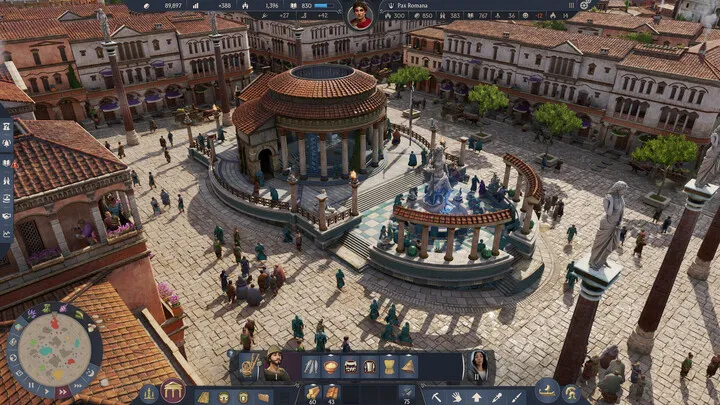
Water is the lifeblood of Rome, and in Anno 117, the Aqueduct is the most complex logistics puzzle you will face. Unlike standard roads, Aqueducts operate on a Pressure and Gradient system. You must place Castellum Aquae (Water Towers) on elevated terrain and connect them to your city centers. The efficiency of your Thermae (Baths) and Fountains is determined by the distance from the source and the number of "Taps" on the line. Overloading an Aqueduct with too many public buildings will cause the pressure to drop, rendering your high-tier villas uninhabitable.
Advanced Plumbing Logistics
- Gravity Buffs: Build your industrial zones at lower elevations to capitalize on "Grey Water" runoff, which can power grain mills without requiring fresh pressure.
- The Fountain Overlap: Fountains increase the "Desirability" of residential blocks. By placing three fountains in a triangular "Pressure Node," you can boost land value high enough to skip an entire tier of upgrade requirements.
- Reservoir Buffering: Always build a Lead Cistern near your baths to act as a battery for water pressure during seasonal droughts.
3. The Plebeian Engine: Optimizing the Basic Labor Cycle
Your city’s foundation rests on the Plebeians, but their needs in Anno 117 are more dynamic than the "Farmers" of previous games. The game introduces the "Forum Interaction" mechanic. Plebeians don't just consume Olives and Bread; they require "Public Discourse." If your residential blocks are too far from a Forum, their productivity drops by up to 25%, regardless of how full their larder is. Strategic placement of the Forum is the key to minimizing the footprint of your early-game slums.
To maximize efficiency, utilize the "Annona" (Grain Subsidy) system. By setting your Granaries to "Distribute Free Bread," you temporarily forgo tax revenue in exchange for a massive boost to population growth. Use this "Burst Growth" tactic the moment you unlock the second tier of citizens (the Equites). Once the Equites have moved in and started paying higher taxes, you can revert to paid bread to stabilize your treasury. This "Pump and Dump" economic cycle is the fastest way to reach mid-game milestones.
4. The Equites Transition: Managing Luxury and Logistics
When your Plebeians promote to Equites, the logistical complexity triples. Equites demand Garum (Fermented Fish Sauce), fine linens, and access to the Amphitheater. The production of Garum is particularly tricky because it generates "Malus" (unpleasantness). Placing Garum vats near your residential zones will tank your desirability rating. The technical solution is to create "Industrial Satellites"—small islands or distant shorelines dedicated to "Stink-Producing" goods, connected via high-speed Liburnian transport ships.
The Hierarchy of Equites Needs
- Olives/Oil: The baseline for lighting and cooking.
- Garum: The primary protein source that boosts tax efficiency.
- Amphitheater Access: Necessary for "Mood Stabilization."
- Linens: Unlocks the "Patrician" upgrade path.
5. Mediterranean Arteries: High-Volume Trade and Piracy
Trade in Pax Romana is governed by the "Mare Nostrum" (Our Sea) system. The Mediterranean is divided into zones with varying wind speeds and piracy risks. To optimize your trade routes, you must match your ship types to the environment. The Bireme is excellent for short-range coastal trade in calm waters, but the heavy Quinquereme is required for the long-distance grain routes from North Africa to avoid losses from storms and raiders.
6. The Patrician Plateau: Luxury Goods and Imperial Favor
Patricians represent the pinnacle of your city’s social ladder, and their requirements are astronomical. They demand Silks from the East, Marble from Carrara, and Exotic Animals for the Games. This requires you to engage with the World Map Expeditions. Unlike the passive trade routes, Expeditions are narrative-driven events where your choice of Captain and Provisions determines the outcome. Success brings back "Legendary Artifacts" that provide island-wide buffs to production speed.
Managing Patricians is a balancing act of Prestige and Maintenance. Every Patrician villa consumes a staggering amount of Luxury Goods, but they provide the Senate Votes needed to pass Imperial Decrees. If you can maintain 500 Patricians, you can unlock the "Pax Romana" Decree, which freezes the maintenance costs of all military buildings for ten minutes, allowing you to prepare for the inevitable Germanic incursions on your borders.
7. Urban Fire and Plague: The Risk Management System
As your city grows in density, the risk of fire and disease increases exponentially. In Anno 117, fire is not just a random event; it is a calculation based on "Heat Density." Placing bakeries or blacksmiths too close to wooden Plebeian housing is a recipe for disaster. You must build Vigiles Stations (Fire Stations) with a clear path to an Aqueduct connection. Without water pressure, the Vigiles are 70% less effective at dousing flames.
Plague management involves the Medica (Clinic) and the Sewer System. Underground sewers are a late-game infrastructure project that requires massive amounts of stone and water pressure. However, once installed, they remove the "Hygiene Cap" on residential blocks, allowing you to pack houses tighter without risking a cholera outbreak. This spatial optimization is essential for squeezing the maximum number of Patricians into your city’s limited Great Wall perimeter.
8. Military Engineering: Castra and Border Defense
The Pax Romana is not maintained by peace alone. You must build Castra (Forts) along your borders to deter barbarian tribes. In Anno 117, military units are not individual soldiers but Legions assigned to a specific fort. The strength of a Legion is tied to its Logistics Chain. If your fort is not supplied with iron weapons and salted meats, the Legion's Morale will decay, making them likely to desert during a siege.
Siege Defense Priorities
- Wall Reinforcement: Upgrade your palisades to stone walls the moment you reach the Equites tier.
- Ballista Placement: Place siege engines on the corners of your walls to maximize their overlapping fields of fire.
- Supply Depots: Build small granaries inside the fort to ensure your troops can survive a blockade.
9. The Silk Road: Managing Global Diplomacy
The World Map in Anno 117 features other Governors and foreign powers like the Parthian Empire. Diplomacy is a game of Gifts and Grievances. Sending a shipment of Fine Wine to a rival Governor can earn you a Trade Treaty, but expanding your territory too close to their borders will generate Grievance Points. High Grievance leads to trade embargoes, which can be devastating if you rely on that rival for your Silk supply.
Utilize the "Senate Alliance" to lock in long-term stability. A Senate Alliance allows you to share "Prestige Pools" with another player, making it easier for both of you to unlock high-tier Imperial buildings like the Colosseum or the Pantheon. This cooperative play is the most efficient way to handle the massive resource costs of the game’s "Wonders."
10. The Eternal City: Achieving Monumental Victory
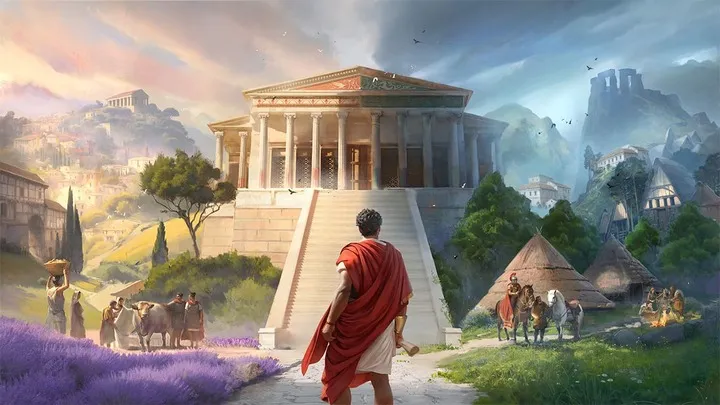
The end-game of Anno 117 is the construction of a Great Wonder. These massive projects require thousands of tons of Marble, Gold, and high-tier labor. To finish a Wonder, you must enter a "Dedicated Construction Phase," where all other production on the island is slowed down to focus on the monument. Successfully completing the Pantheon provides an "Eternal Victory," granting you a permanent boost to your global governor rank and unlocking new starting traits for your next campaign.
Achieving this requires a perfectly balanced economy where your Plebeians, Equites, and Patricians are all operating at peak efficiency. One break in the supply chain—a single missing shipment of Olives—can cause a cascade of social de-ranking that halts the construction of your Wonder. Mastery of Anno 117 is found in this final stability, where your city operates as a perfect, self-sustaining machine under the Roman sun.
Conclusion
Anno 117: Pax Romana is a profound mechanical journey that rewards dedication and technical precision. From the initial thrill of your first Equites promotion to the high-stakes strategy of Senate alliances, the game constantly challenges you to evolve your playstyle. By mastering hydraulic engineering, cultural syncretism, and the intricate Roman social hierarchy, you transform from a simple Governor into a force of historical nature. Remember that the "Prestige" you display in your city is not just for show—it is the ultimate metric of your mastery over the game's systems. Build wisely, for the eyes of Rome are upon you.